Launch offer — valid today only

📄 Digital book in PDF · read it on your phone or print it

Campervan Solar & Lithium Illustrated: Your 12 V Wiring in Drawings Seven Steps, Always in Order

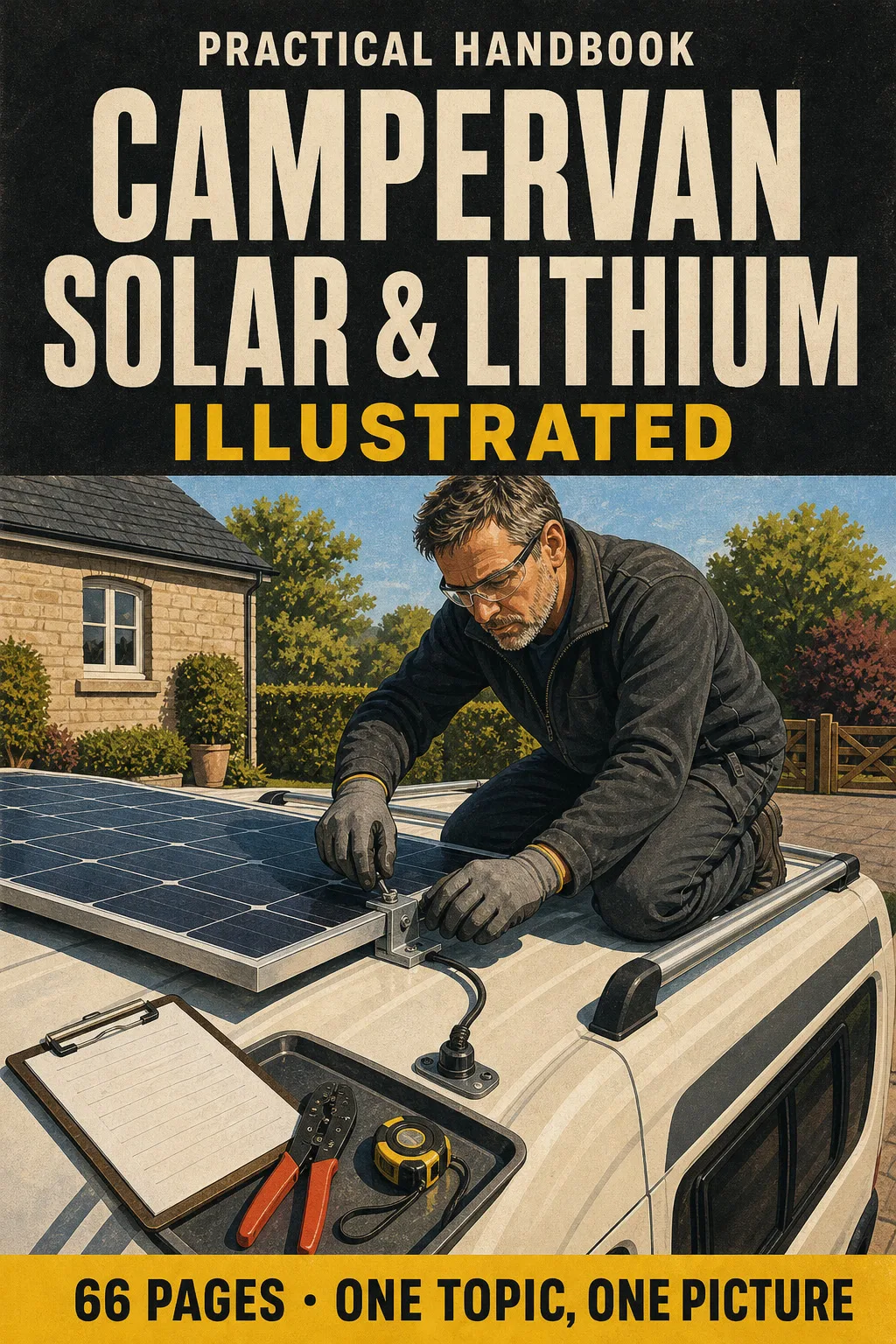
Seven steps, always in this order: daily power use, panel watts, the lithium battery, charging (MPPT and DC-DC), fuses, cable size in mm² and fitting, down to a roof entry that doesn't leak. Every topic has its own page: the drawing first, then what you need to remember. 66 illustrated pages.

START PLANNING IT THIS WAY

🔒 Secure checkout · PDF by email · 30-day guarantee

Every topic, its own page7 steps, always in this order: power use, panels, battery, charging, fuses, cable, fitting. Each one drawn, with a worked example.
66 illustrated pages9 parts, from the whole system on one page to the final checklist
Up-to-date sourcesBS EN 1648-2, BS 7671 and manufacturers' data
PDF by emailFormat

Look Inside the Book

Every page has one big drawing and a box with the numbers and rules you need:

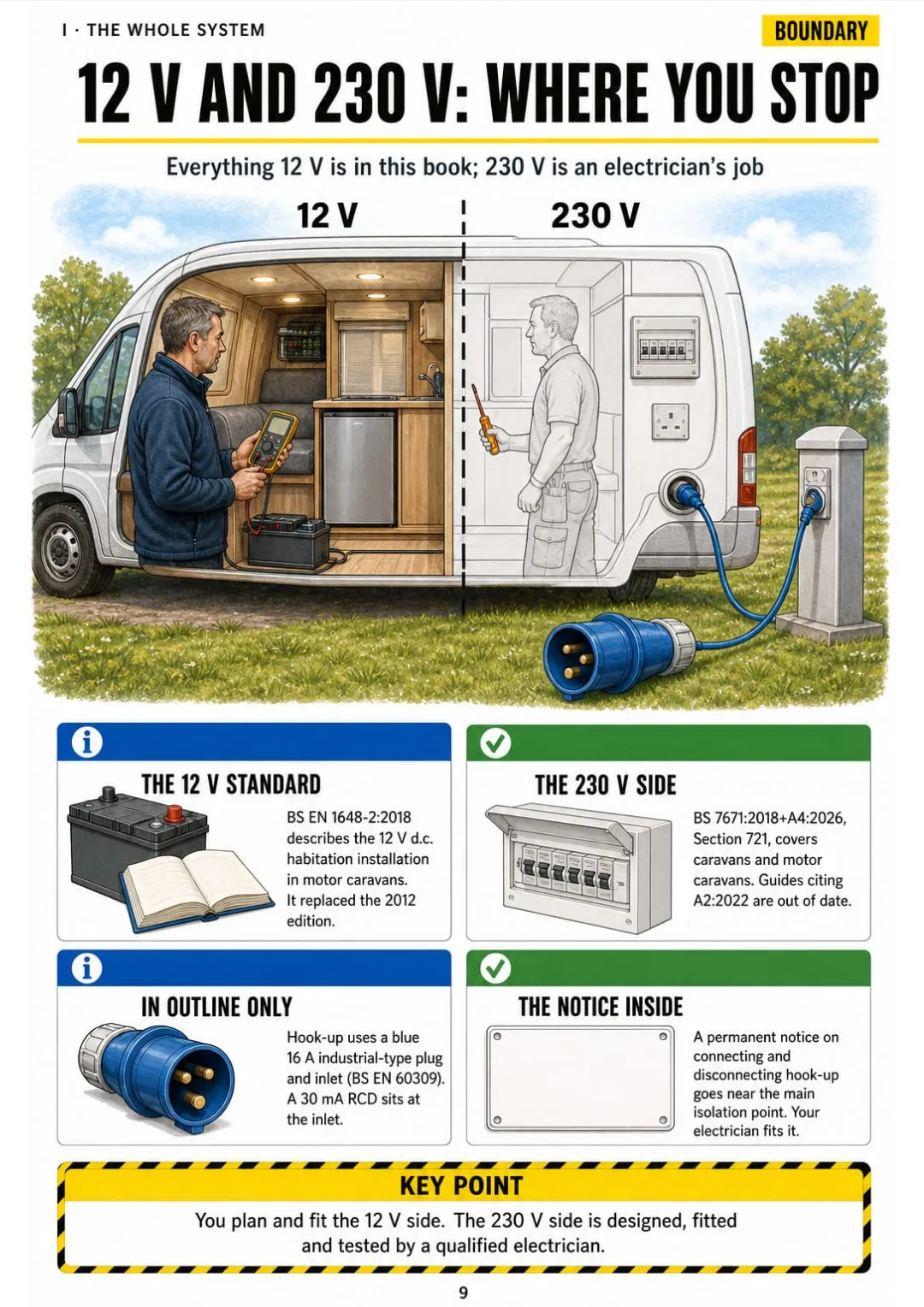
12 V side: BS EN 1648-2:2018 · 230 V side: BS 7671 Section 721, for an electrician
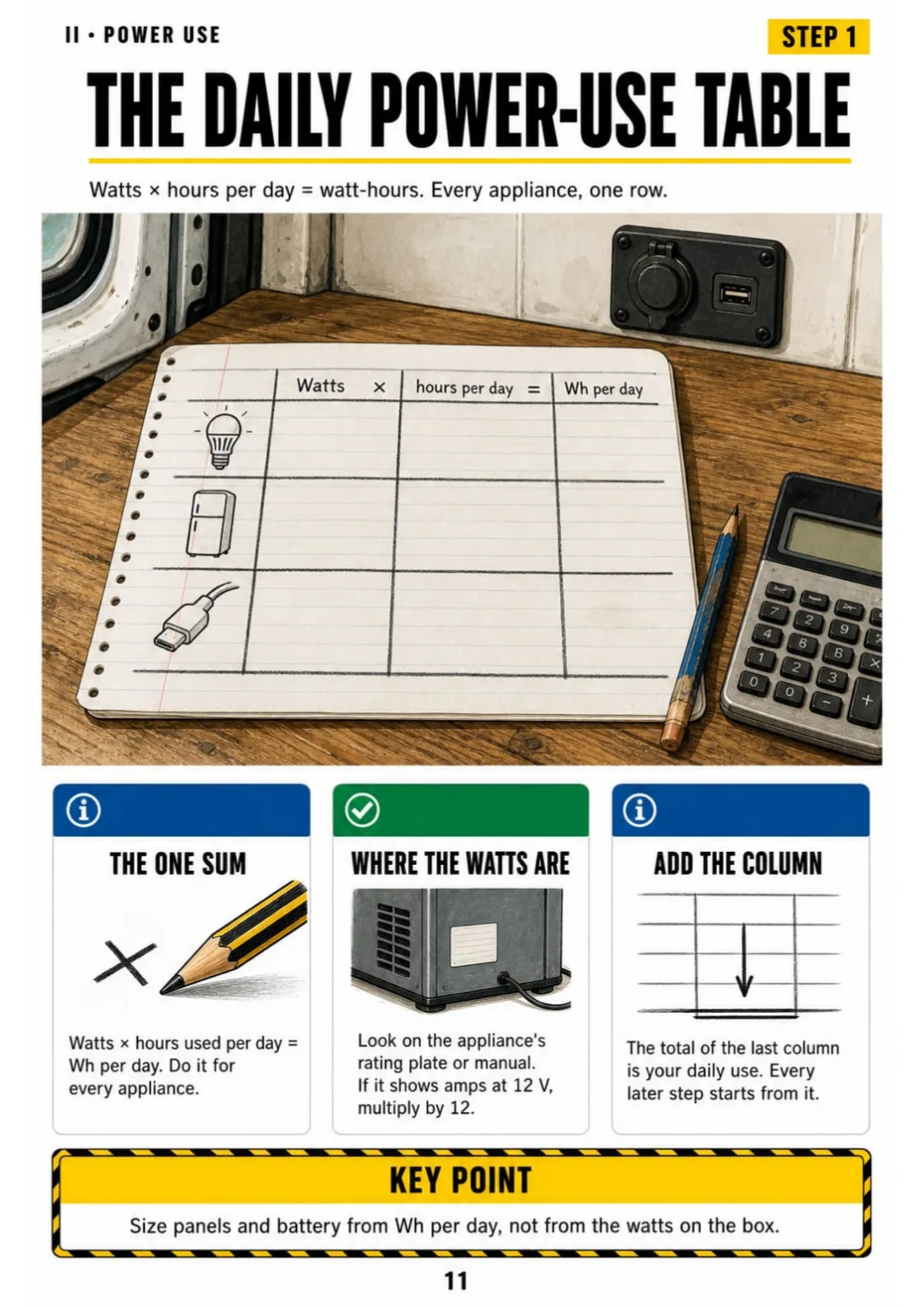
Watts × hours = Wh per day: the table every 12 V system starts from
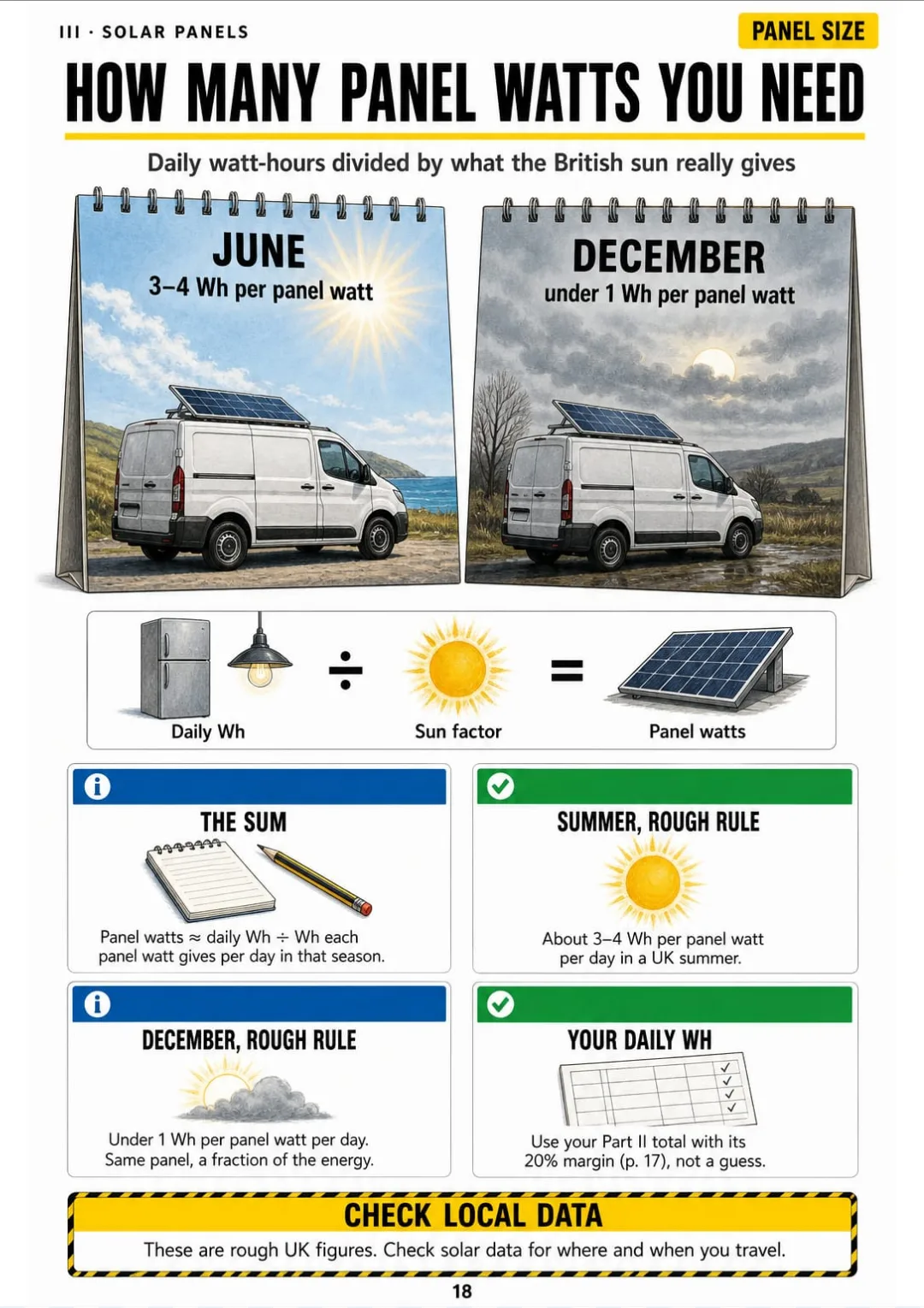
Rough UK rule: 3–4 Wh per panel watt a day in summer, under 1 in December.
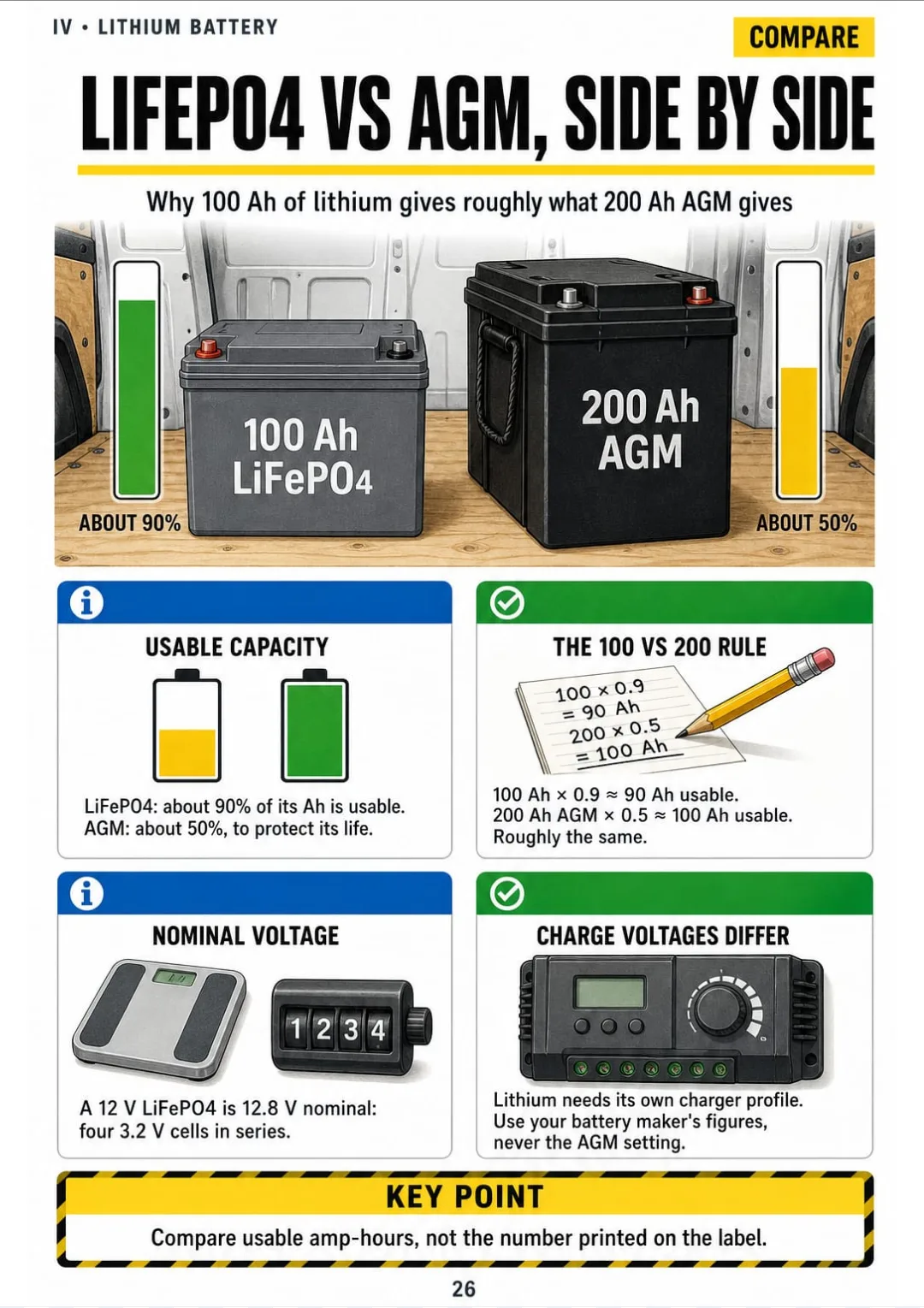
LiFePO4 about 90% usable vs AGM about 50%: 100 Ah ≈ 200 Ah AGM
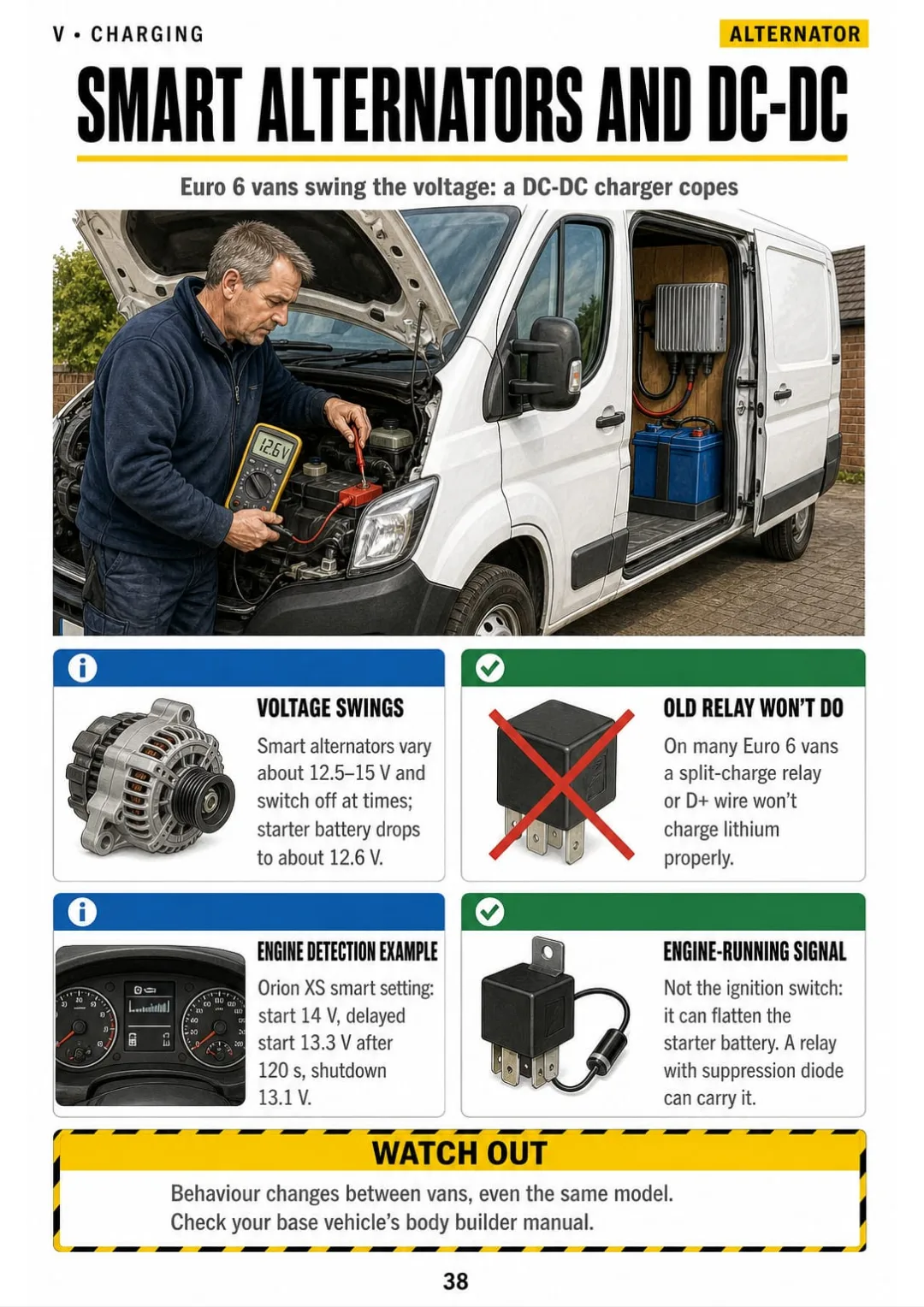
Smart alternators swing 12.5–15 V: the DC-DC charger detects the engine and charges lithium.
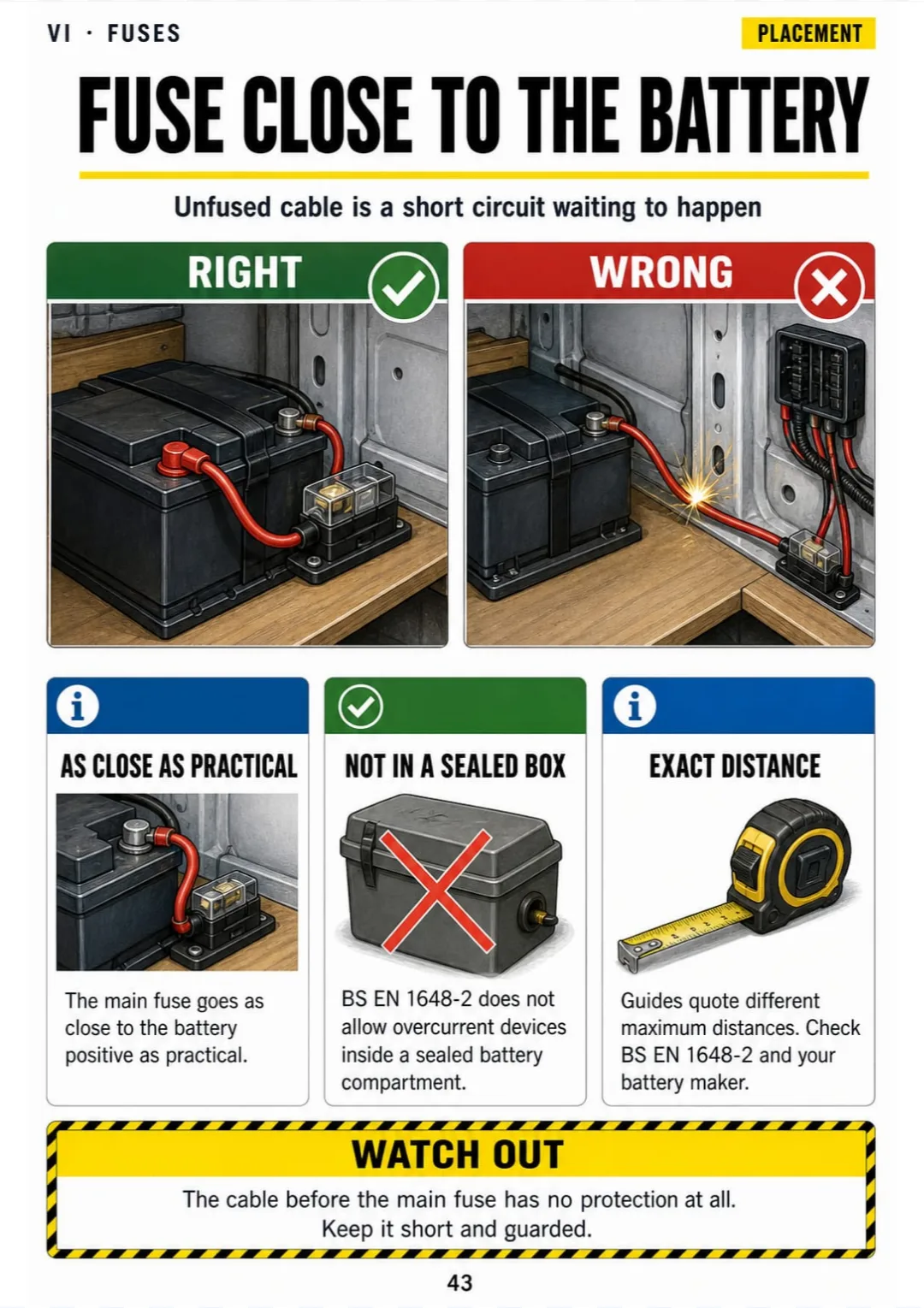
Main fuse beside the positive terminal, never inside a sealed battery box.
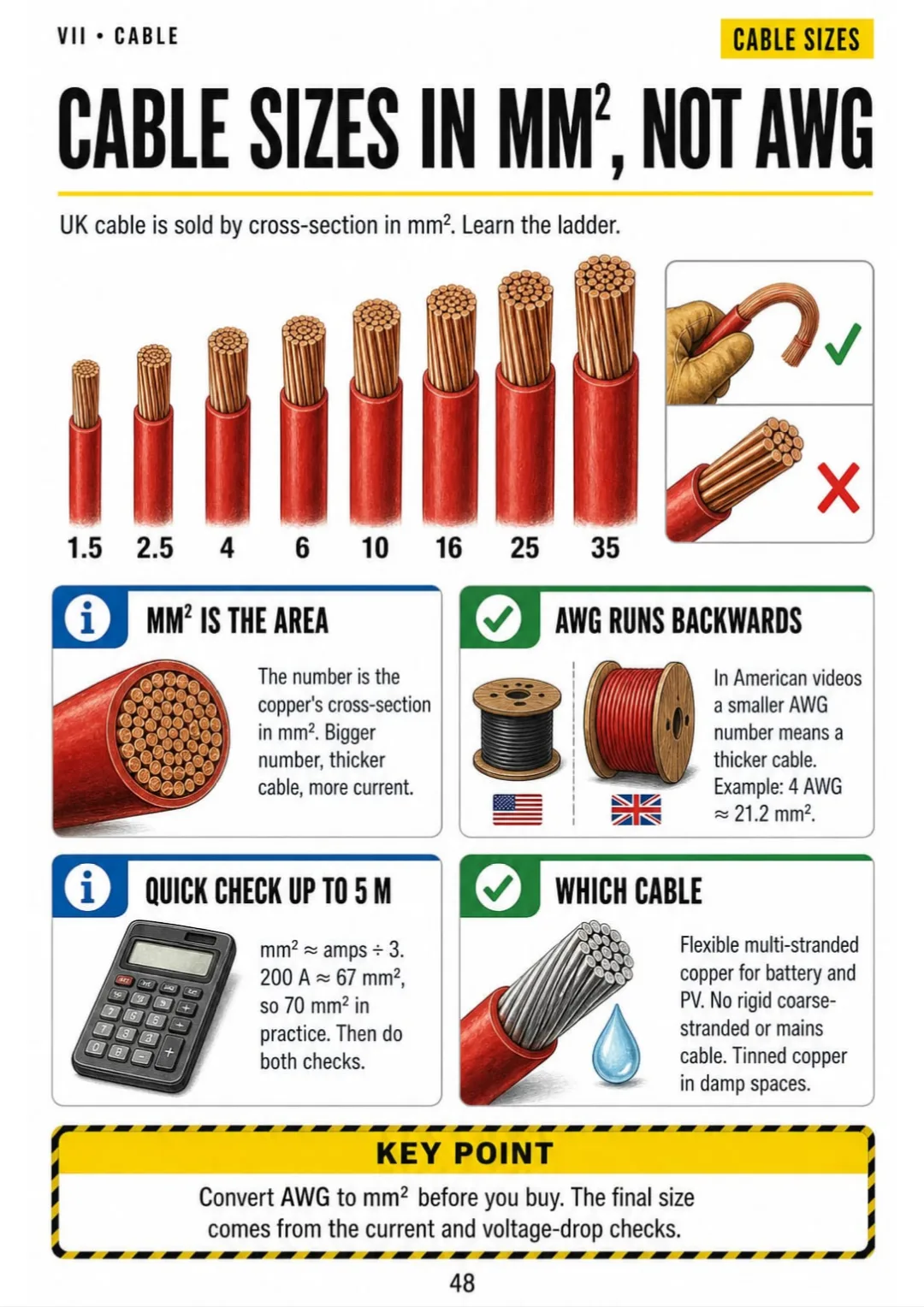
1.5 to 35 mm² in one row, plus the quick check: mm² ≈ amps ÷ 3 (up to 5 m)
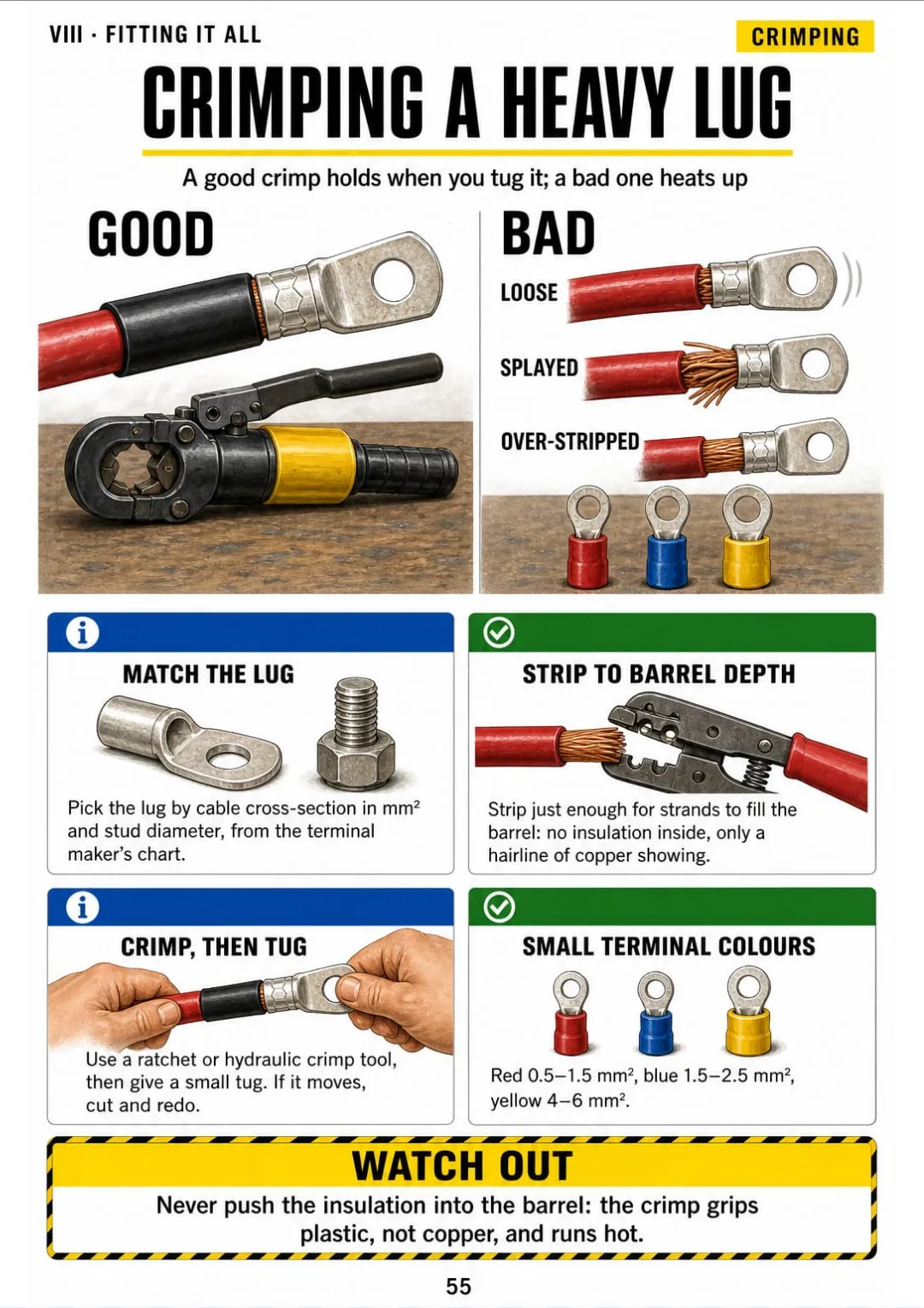
Good crimp vs loose, splayed and over-stripped, plus red, blue and yellow terminal sizes

Swipe to see more →

These are real pages from the book. The table of contents is the full one: 9 parts and 62 topics.

The Problem Isn't You. It's How It Was Explained.

You're on a stepladder with a tape measure across the van roof, and three panels sit in a basket on your phone. 100 W, 200 W or 400 W: you have to pick one tonight.

The guides answer in paragraphs: peak sun hours, derating, losses, latitude. Then a forum thread says "just fit as much as the roof takes", and you're no closer to a number.

Rough UK rule: 3–4 Wh per panel watt a day in summer, under 1 in December.

In the book it's one page. Your daily Wh on one side, the panel on the other, and a box with the rough UK rule: about 3–4 Wh per panel watt a day in summer, under 1 in December. Marked to check against your panel's data.

The topics after it work the same way: series or parallel, the cold-morning voltage check, sizing the MPPT, the 0 °C charging rule and the roof cable entry. Each one has its own page.

You see why the number is what it is. You order the right panel and fit it without reopening ten tabs.

COMPARE FOR YOURSELF

The Same Topic, Two Ways to Learn It

THIS
  • The manual: line after line
  • Power-use sums explained only in words
  • You start the build still unsure
Prior to the selection of any battery or charging source, the installer should establish the anticipated daily energy consumption of all connected d.c. loads. For each appliance, the rated power in watts is multiplied by the expected hours of operation per twenty-four-hour period to yield a figure in watt-hours. Where appliances operate intermittently, as is the case with compressor refrigerators, an appropriate duty-cycle factor must be applied. The individual values are then summed, and an allowance for conversion losses and seasonal variation is added to the total.
FOR THIS
  • The power-use table in one drawing
  • Watts, hours and Wh in a box
  • You see it and you get it
Watts × hours = Wh per day: the table every 12 V system starts from
CONTENTS

Take a Look at the 9 Parts and 62 Topics

The whole system on one page, power use, solar panels, the lithium battery, charging, fuses and protection, cable, fitting it all, and checks and records: 66 pages, all illustrated.

IThe whole system on one page · pp. 5-10
  1. Your van's 12 V system as a simple map
  2. The order that never changes
  3. Volts, amps, watts and amp-hours in one picture
  4. Leisure side vs vehicle side
  5. 12 V and 230 V: where your job stops
  6. The tools and parts list before you start
IIStep 1: work out your power use · pp. 11-17
  1. The daily power-use table
  2. The compressor fridge: your biggest load
  3. Diesel heater, water pump and lights
  4. Phones, laptops and USB
  5. Inverter loads: why a kettle changes everything
  6. Summer days vs winter days
  7. Worked example: a weekend van's daily total
IIIStep 2: solar panels · pp. 18-25
  1. How many watts of panel you need
  2. Worked example: sizing the roof array
  3. Rigid, semi-flexible or portable
  4. Measuring your roof before you buy
  5. Series or parallel
  6. The cold-morning voltage check
  7. Reading a panel's label
  8. Panel cable and connectors
IVStep 3: the lithium battery · pp. 26-32
  1. LiFePO4 vs AGM in one drawing
  2. Sizing your battery in Ah
  3. What the BMS does and doesn't do
  4. Cold charging: the 0 °C rule
  5. Where the battery goes and how it's held
  6. Weight and your payload
  7. Two batteries in parallel
VStep 4: charging · pp. 33-40
  1. Three ways the battery gets charged
  2. MPPT or PWM
  3. Sizing the MPPT controller
  4. MPPT settings for lithium
  5. Connect in this order
  6. Smart alternators and the DC-DC charger
  7. Sizing the DC-DC charger and its cables
  8. Hook-up and the mains charger, in outline
VIStep 5: fuses and protection · pp. 41-47
  1. A fuse protects the cable, not the gadget
  2. Every place a fuse goes
  3. Fuse close to the battery
  4. Fuse types and lithium's short-circuit current
  5. The main isolator switch
  6. The 12 V fuse box and circuit list
  7. The negative side: busbar and shunt
VIIStep 6: cable · pp. 48-54
  1. Cable sizes in mm², not AWG
  2. Two checks: current and voltage drop
  3. The voltage-drop sum, worked
  4. How much drop to allow
  5. Inverter cables: the thick ones
  6. Colours, labels and routing
  7. Chassis negative or a dedicated return
VIIIStep 7: fitting it all · pp. 55-61
  1. Crimping a heavy lug, before and after
  2. Torque on terminals
  3. Mounting rigid panels on the roof
  4. A roof cable entry that doesn't leak
  5. Laying out the electrics locker
  6. Fitting the battery monitor
  7. First power-up, in order
IXChecks, records and common mistakes · pp. 62-66
  1. Your wiring record for the insurer
  2. Seasonal checks
  3. Fault-finding by symptom
  4. The most frequent mistakes, drawn
  5. Your system on one page: final checklist

One Page, One Topic, All Clear

Think of it this way:

It's a Saturday in February, the van's on the drive and the DC-DC charger is still in its box. You need to know which cable runs from the alternator and where each fuse goes.

You open the DC-DC page. The starter battery, the charger and the leisure battery are drawn in a line, with a fuse by each battery and the mm² written on the cable.

Smart alternators swing 12.5–15 V: the DC-DC charger detects the engine and charges lithium.

It's the same with MPPT settings for lithium, the 0 °C charging rule, the main isolator, the negative busbar and the shunt: each one on its own page.

Campervan Solar & Lithium Illustrated is 9 parts and 62 topics, all drawn, ending with fault-finding by symptom, the most frequent mistakes and a final checklist.

What you see drawn, you don't have to memorize.

What's Inside Campervan Solar & Lithium Illustrated:

Ipp. 5-10

The whole system on one page

The 12 V map, the order that never changes, volts, amps, watts and Ah in one picture, leisure vs vehicle side, where 230 V stops being your job, and the parts list.

IIpp. 11-17

Step 1: work out your power use

Know your daily Wh before you buy a single part: the power-use table, the compressor fridge, heater, pump and lights, phones and USB, why an inverter kettle changes everything, summer vs winter, and a weekend van worked out.

IIIpp. 18-25

Step 2: solar panels

Panel watts, a roof array sized step by step, rigid vs semi-flexible vs portable, measuring the roof, series or parallel, the cold-morning voltage check, panel labels and connectors.

IVpp. 26-32

Step 3: the lithium battery

LiFePO4 vs AGM, sizing in Ah, what the BMS does and doesn't do, the 0 °C charging rule, where the battery goes, weight and payload, and two batteries in parallel.

Vpp. 33-40

Step 4: charging

Three ways to charge, MPPT vs PWM, sizing and setting the MPPT for lithium, the connection order, smart alternators and the DC-DC charger, and hook-up in outline.

VIpp. 41-47

Step 5: fuses and protection

Know which fuse goes where, and why: a fuse protects the cable, every place one goes, fusing close to the battery, fuse types and lithium's short-circuit current, the isolator, the fuse box and the negative busbar with shunt.

VIIpp. 48-54

Step 6: cable

mm² not AWG, the current and voltage-drop checks, the drop sum worked through, how much drop to allow, inverter cables, colours and labels, and chassis vs dedicated return.

VIIIpp. 55-61

Step 7: fitting it all

Crimping a heavy lug before and after, terminal torque, mounting rigid panels, a sealed roof entry, the electrics locker, the battery monitor and the first power-up in order.

IXpp. 62-66

Checks, records and common mistakes

Your wiring record for the insurer, seasonal checks, fault-finding by symptom, the most frequent mistakes drawn, and the whole system on one final checklist.

At the end of the book: Worked examples in Ah, Wh and mm², fault-finding by symptom and a one-page final checklist.
Plus: 2 Free Books

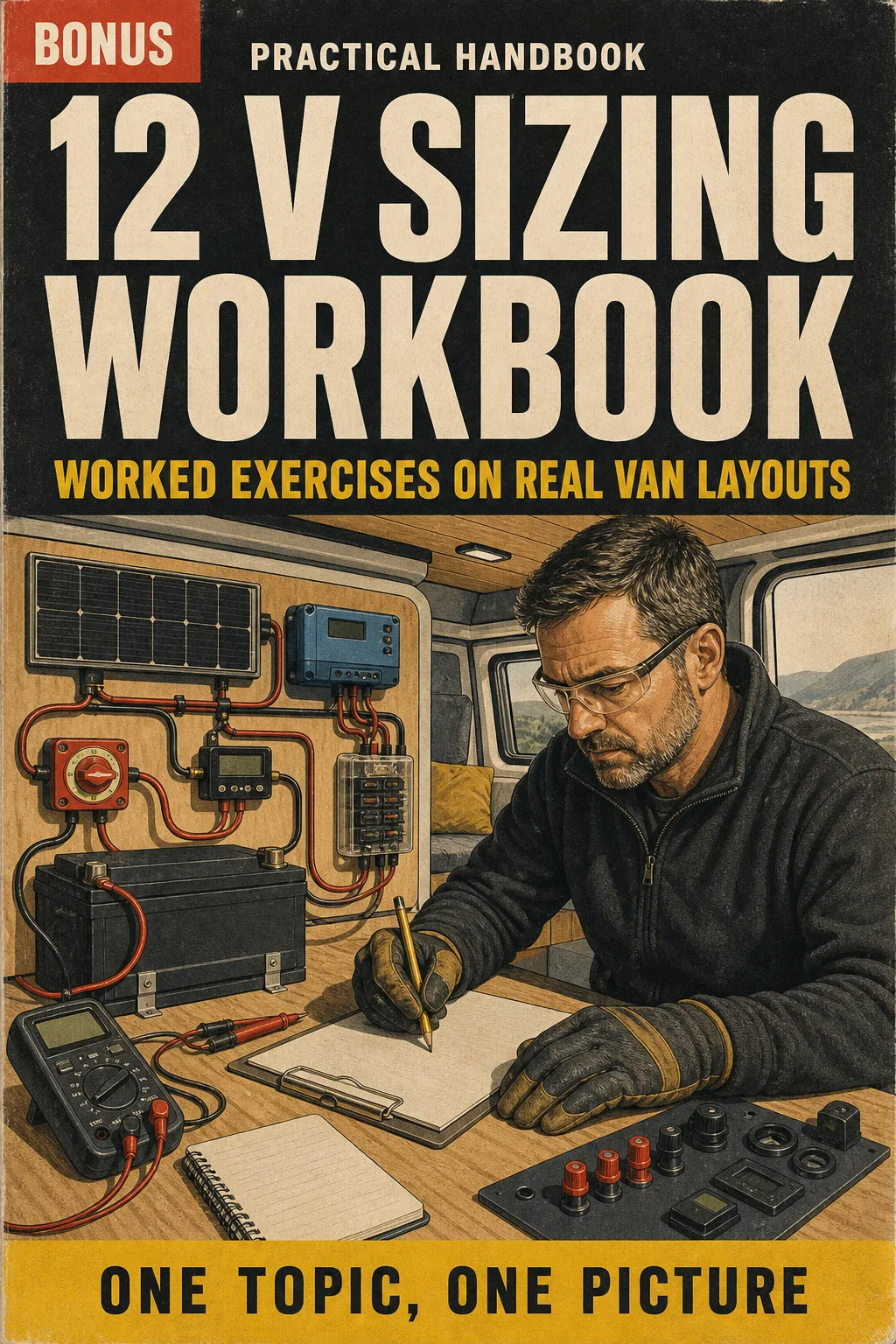
12 V Sizing Workbook: Worked Exercises on Real Van Layouts

BONUS 1: «12 V Sizing Workbook: Worked Exercises on Real Van Layouts»

Value on its own: US$ 17.90

Practise working out daily power use, solar watts, fuse ratings and cable sizes on real van layouts before you buy a single part, with every answer worked through step by step.

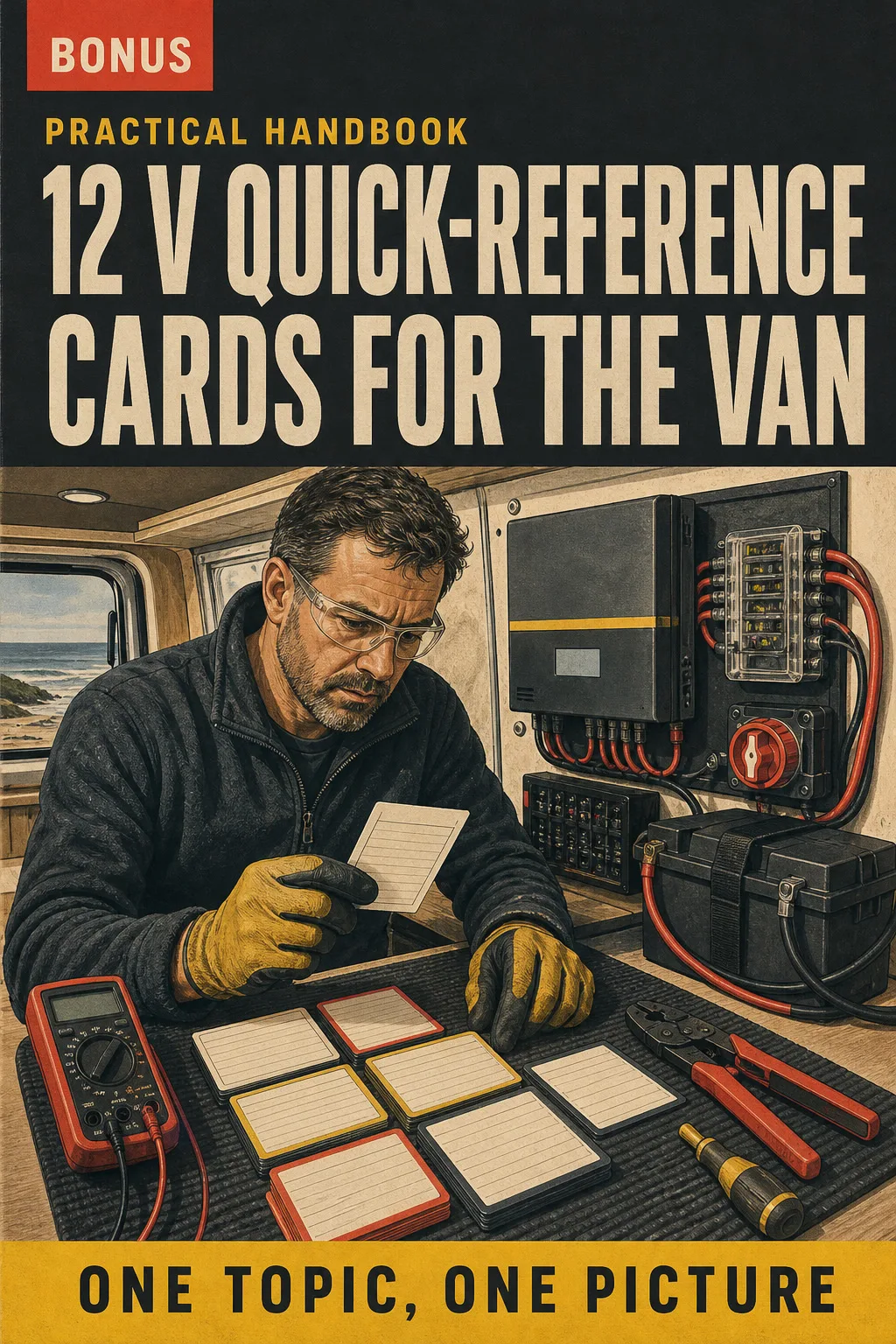
12 V Quick-Reference Cards for the Van

BONUS 2: «12 V Quick-Reference Cards for the Van»

Value on its own: US$ 14.90

The fuse positions, cable sizing steps, charger checks and seasonal checks on a few printable cards, so you've got what you need to hand in the van, at a glance.

Campervan Solar & Lithium Illustrated with 2 Free Books

  • Campervan Solar & Lithium Illustrated: 66 illustrated pagesUS$ 63
  • BONUS 1: 12 V Sizing Workbook: Worked Exercises on Real Van LayoutsUS$ 17.90
  • BONUS 2: 12 V Quick-Reference Cards for the VanUS$ 14.90
  • High-resolution PDF to printIncluded
Total value US$ 95.80
YOUR PRICE:
US$ 27
You save US$ 68.80
YES, I WANT CAMPERVAN SOLAR & LITHIUM ILLUSTRATED FOR US$ 27

📄 This is a digital PDF book sent to your email: nothing is printed or shipped.

Secure purchaseEncrypted payment30-day guarantee

PDF by email: We email you Campervan Solar & Lithium Illustrated as a PDF, together with the two free books. It's a single payment: no installments, no extra charges.

Who This Book Is For

You're planning the build

You're planning the build

Work out your daily Wh, panel watts and battery Ah on paper first, so you buy the right parts once.

Fitting day is coming

Fitting day is coming

Every fuse position, cable size and connection order is drawn, so you fit it all in the same order and seal the roof properly.

Your system's already in

Your system's already in

Check your MPPT settings, find faults by symptom and keep a tidy wiring record to show your insurer.

Everything You Get Today

US$ 95.80US$ 27
YES, I WANT CAMPERVAN SOLAR & LITHIUM ILLUSTRATED FOR US$ 27

📄 This is a digital PDF book sent to your email: nothing is printed or shipped.

30DAYS
GUARANTEE

30-Day Guarantee

Try Campervan Solar & Lithium Illustrated for 30 days, bonus books included.

We refund everything if the file won't open, if the book isn't what you see here, if you were charged twice or if the email doesn't arrive. Just email us.

You pay once. No subscriptions.

Frequently Asked Questions

Is it for me if I've never wired a 12 V system with lithium?

Yes. It starts with volts, amps and watts in one picture and assumes you're handy, not an electrician. It works for self-builds, converted vans and factory motorhomes, and isn't tied to one model.

Where does the content come from?

From BS EN 1648-2 for 12 V installations in motor caravans, BS 7671 Section 721 for the hook-up side (in outline), DVLA/DVSA guidance on weights, and the battery, charger, controller and panel manufacturers' instructions. Every threshold and setting is marked so you can check it against the current edition and your manufacturer's data.

Is it official material?

No. It's an independent illustrated guide. It isn't linked to or endorsed by any standards body, government agency or manufacturer.

Does it replace an electrician or a course?

No. It helps you plan and understand your 12 V leisure system. The 230 V hook-up side is shown in outline only and is a job for a qualified electrician. Insurers differ: tell yours about the changes before you travel and ask if they want the work checked. The book includes a wiring record page, so you can show what you fitted, where each fuse is and which cable sizes you used.

Are the workbook exercises taken from a course or test?

No. They're written for this book and based on example van layouts, with every answer worked through step by step.

When and how does it arrive?

As a PDF by email, sent to the address you enter at checkout. The two free books come the same way.

Do I have to pay every month?

No. It's a one-off payment. There's no subscription.

Can I have it on paper?

Yes. The PDF is ready to print at home or at a print shop, so you can keep it in the van.

How does the refund work?

You have 30 days. We refund everything if the file won't open, if the book isn't what you see on this page, if you were charged twice or if the email doesn't arrive: just email us.

Before You Close This Page

No more rewatching videos that don't agree.

Fuse ratings and cable sizes, drawn and done.

You start the job knowing where everything goes.

Drawings make studying faster.

The book is right below.

One-time payment: US$ 27 · Guarantee: 30 days · PDF by email

YES, I WANT CAMPERVAN SOLAR & LITHIUM ILLUSTRATED FOR US$ 27

📄 This is a digital PDF book sent to your email: nothing is printed or shipped.